One reporting area creates problems across the whole product
What you buy
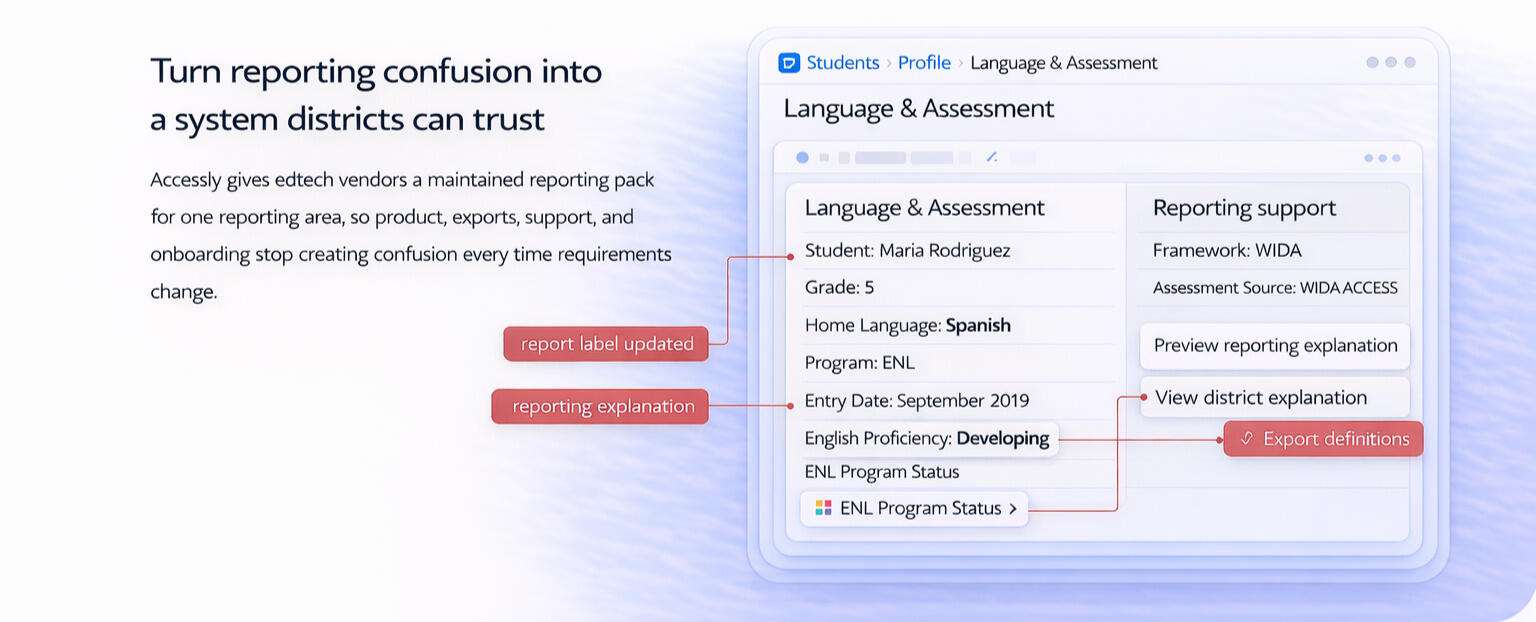
Accessly fixes one district-facing reporting workflow that is being explained differently across the product.That means one workflow is cleaned up across reports, exports, product screens, support language, onboarding materials, and district-facing explanation so your team stops re-explaining the same thing in five places.One workflow at a time
We start with one bounded reporting workflow so the work is specific, visible, and usable fast.Fixed across the surfaces districts actually use
The same workflow is aligned across product screens, exports, help content, support responses, onboarding materials, and district-facing explanation.Kept current as requirements change
When rules, frameworks, or reporting requirements change, the workflow is updated across the system instead of patched in multiple places.
What gets cleaned up
Everything your team is currently rewriting, re-explaining, or translating by hand across that workflow.Product labels and helper text
Field names, status labels, and in-product explanations tied to the workflowExport field definitions
Field names, values, and export descriptions that match the product viewDistrict-facing explanation
Clear workflow explanation used in reports, portals, and district communicationSupport language
Approved responses used across tickets, emails, and help contentOnboarding and rollout wording
Consistent language used during implementation, setup, and trainingOngoing maintenance
Workflow updates applied when rules, frameworks, or reporting requirements change
What you buy
Clean up one reporting workflow
For teams responsible for reporting, implementation, support, or product workflows.We take one reporting workflow that keeps getting explained differently across the product and clean it up across product screens, exports, support content, onboarding materials, and district-facing communication.You leave with a workflow your team does not have to keep translating by hand.One workflow, cleaned up end to end.Licensed for teams.© 2025 Accessly
[email protected]
Start a workflow cleanup
Tell us which district-facing workflow is creating the most confusion across your product. We’ll follow up about cleaning up one workflow across reports, exports, support content, onboarding materials, and district-facing communication.
Used only to respond to this request. No student data needed.
We only use your information to follow up on this inquiry.© 2025 Accessly
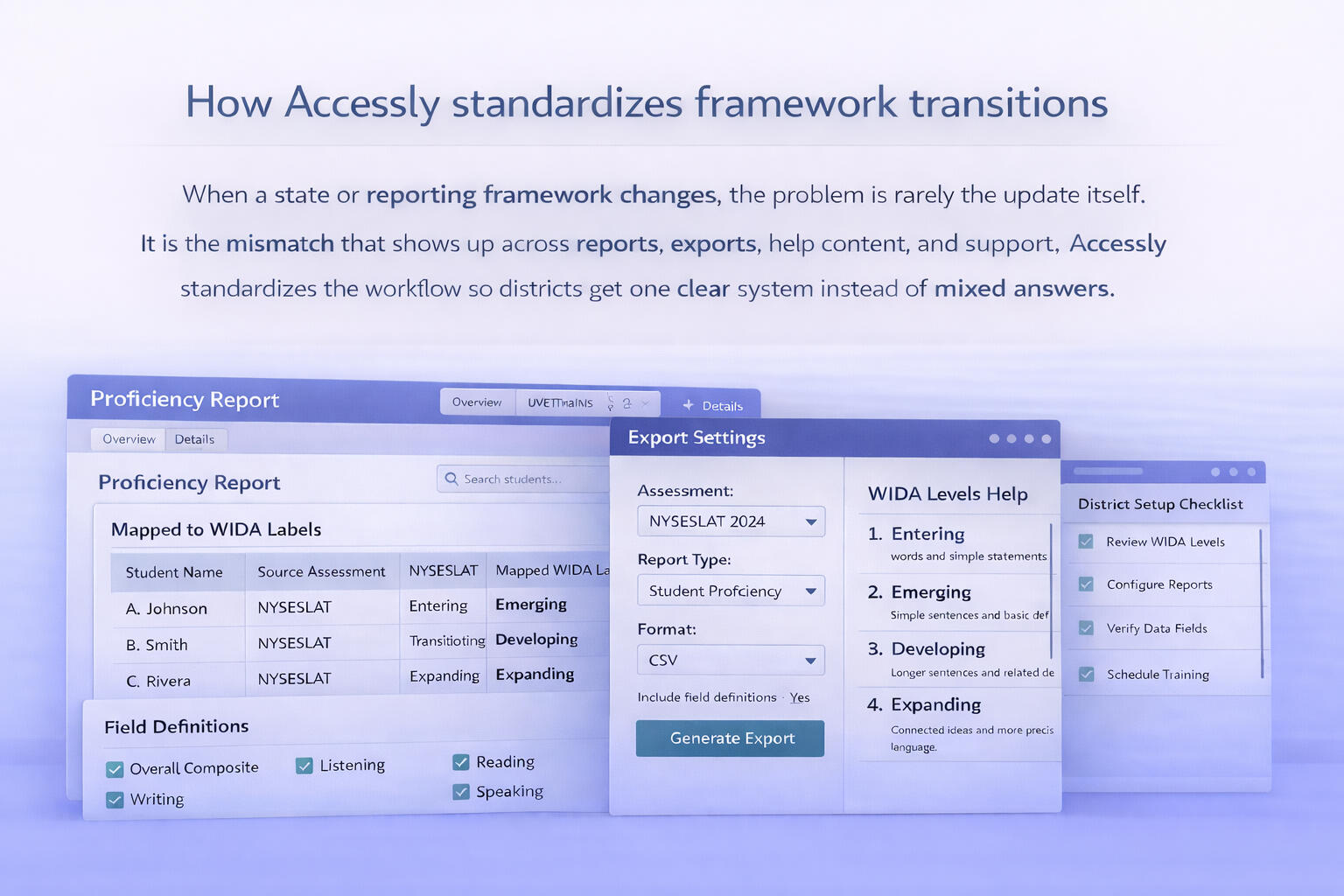
This is one reporting workflow example. The same system is used across reports, exports, help content, onboarding, and district-facing materials
A real transition. A common product problem
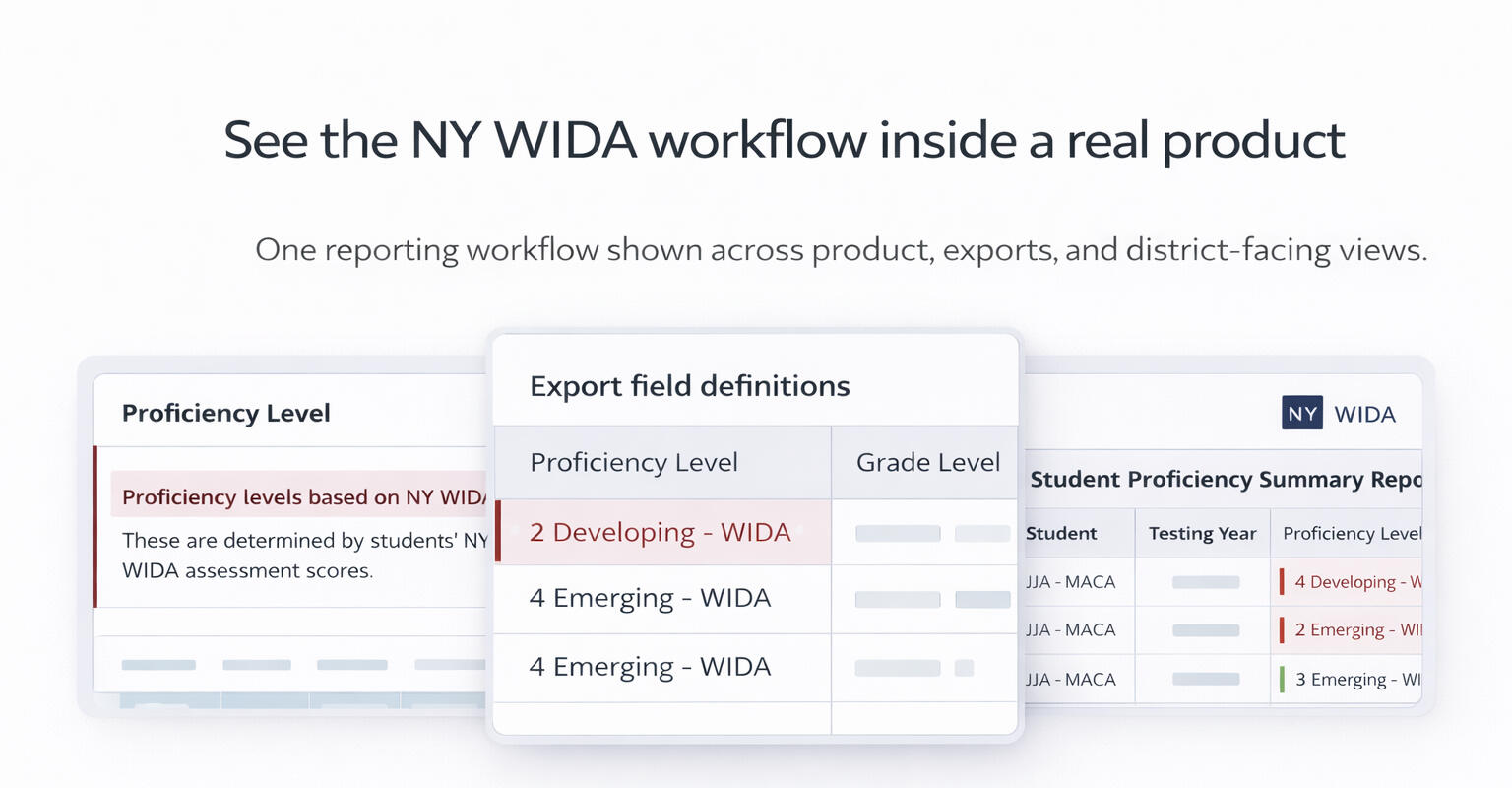
As New York moves from NYSESLAT to WIDA, the real problem is not the update itself. It is the mismatch that can show up across reports, exports, help content, and support.This case study shows how Accessly standardizes that workflow so districts get one clear system instead of mixed answers.
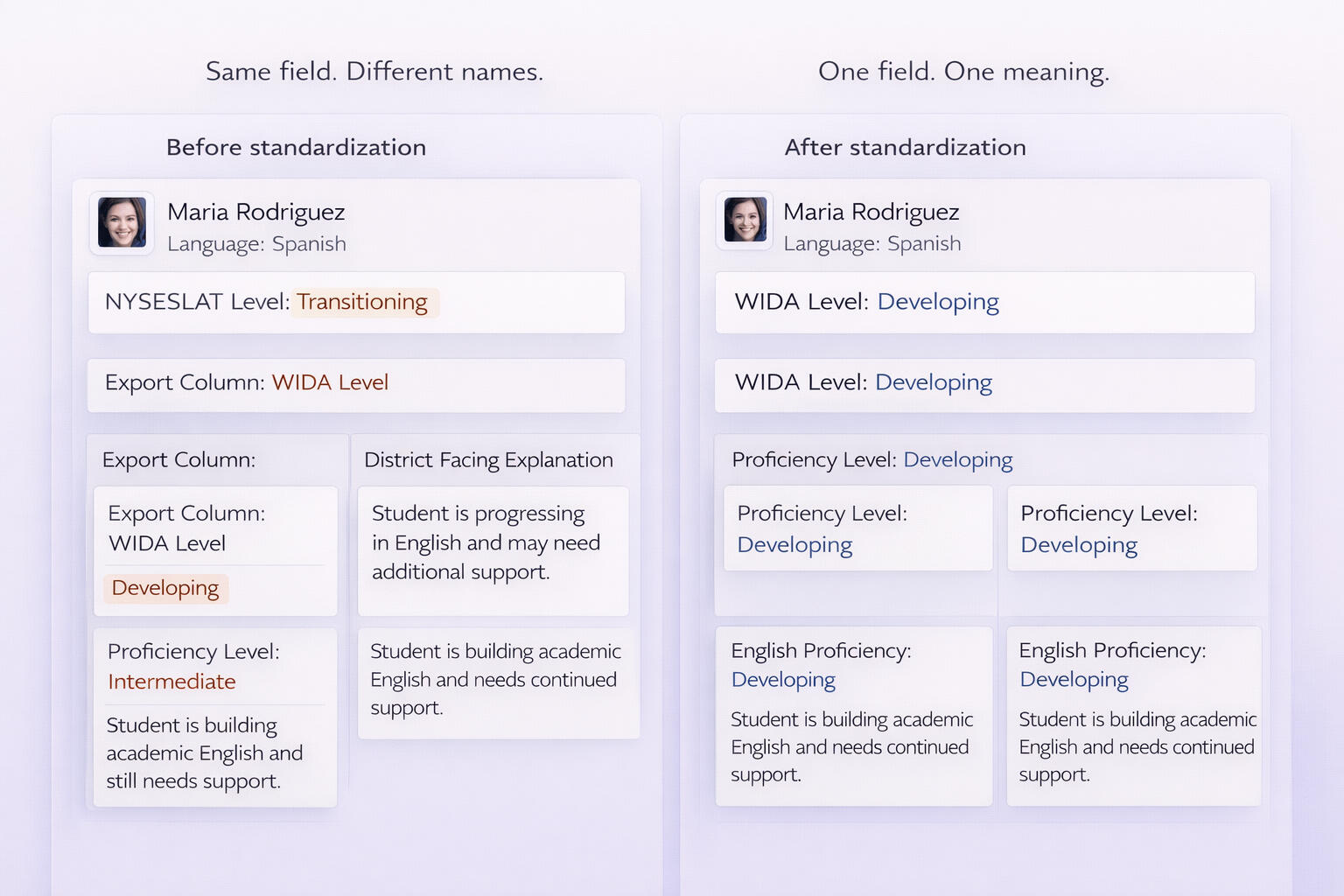
Before and after the NYSESLAT to WIDA transition
This example shows how Accessly turns a messy framework transition into one clear district-facing workflow across reporting, exports, and support.
What changed operationally
Districts stopped seeing mixed terminology across the workflow
Reporting language became easier to explain in rollout and support
Product, support, and implementation teams had one shared definition
The transition became easier to manage inside the product
Report view
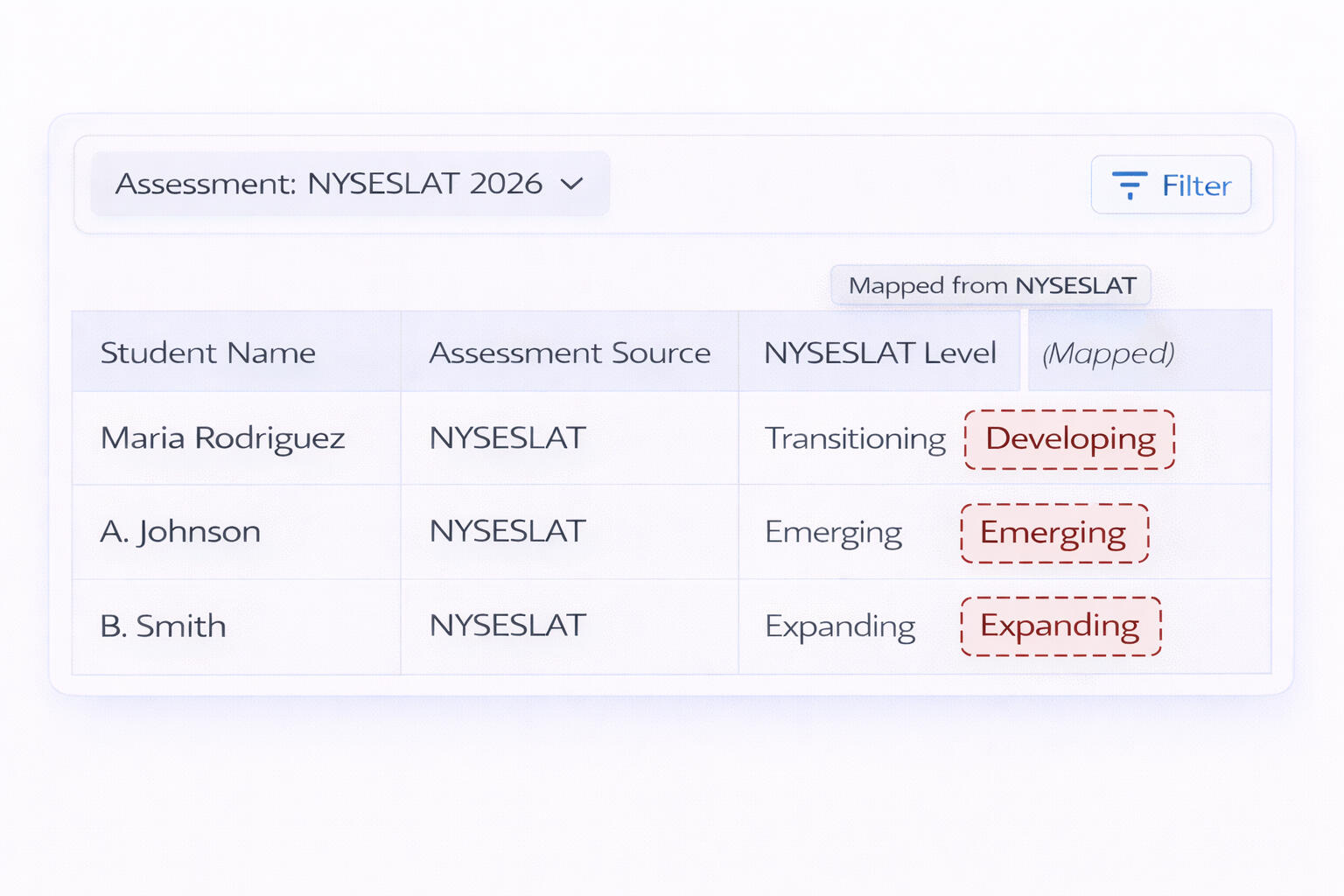
Export fields
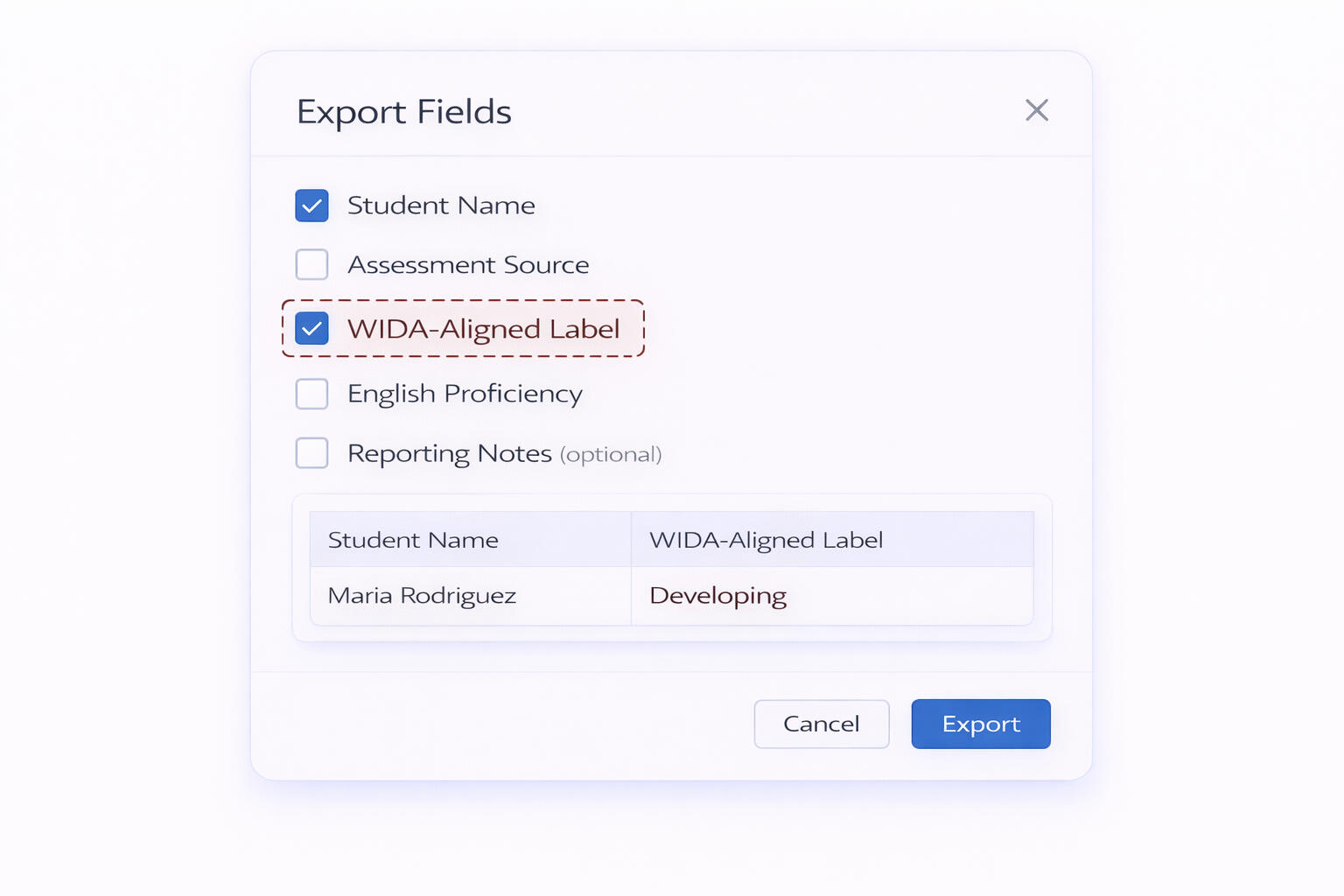
Support responses
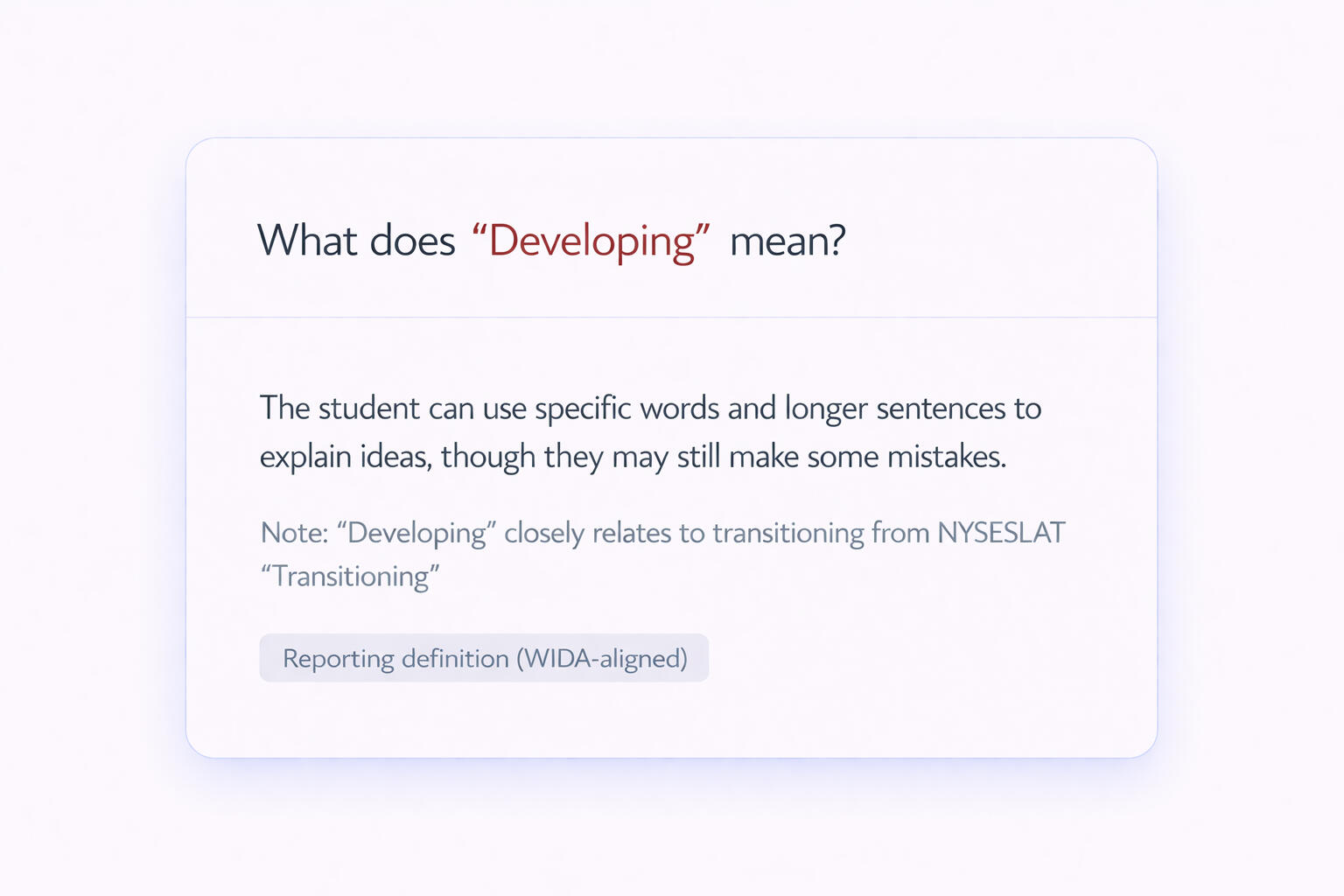
Why this matters beyond one transition
Framework changes expose the same problem many district-facing products already have: the workflow is explained differently depending on where the district sees it. Standardizing that language makes rollout cleaner, reduces support drag, and makes the product easier to trust during change.
Want this applied to your workflows?
We’ll walk through one of your reporting workflows and show where the same field is explained differently across reports, exports, help content, and support.
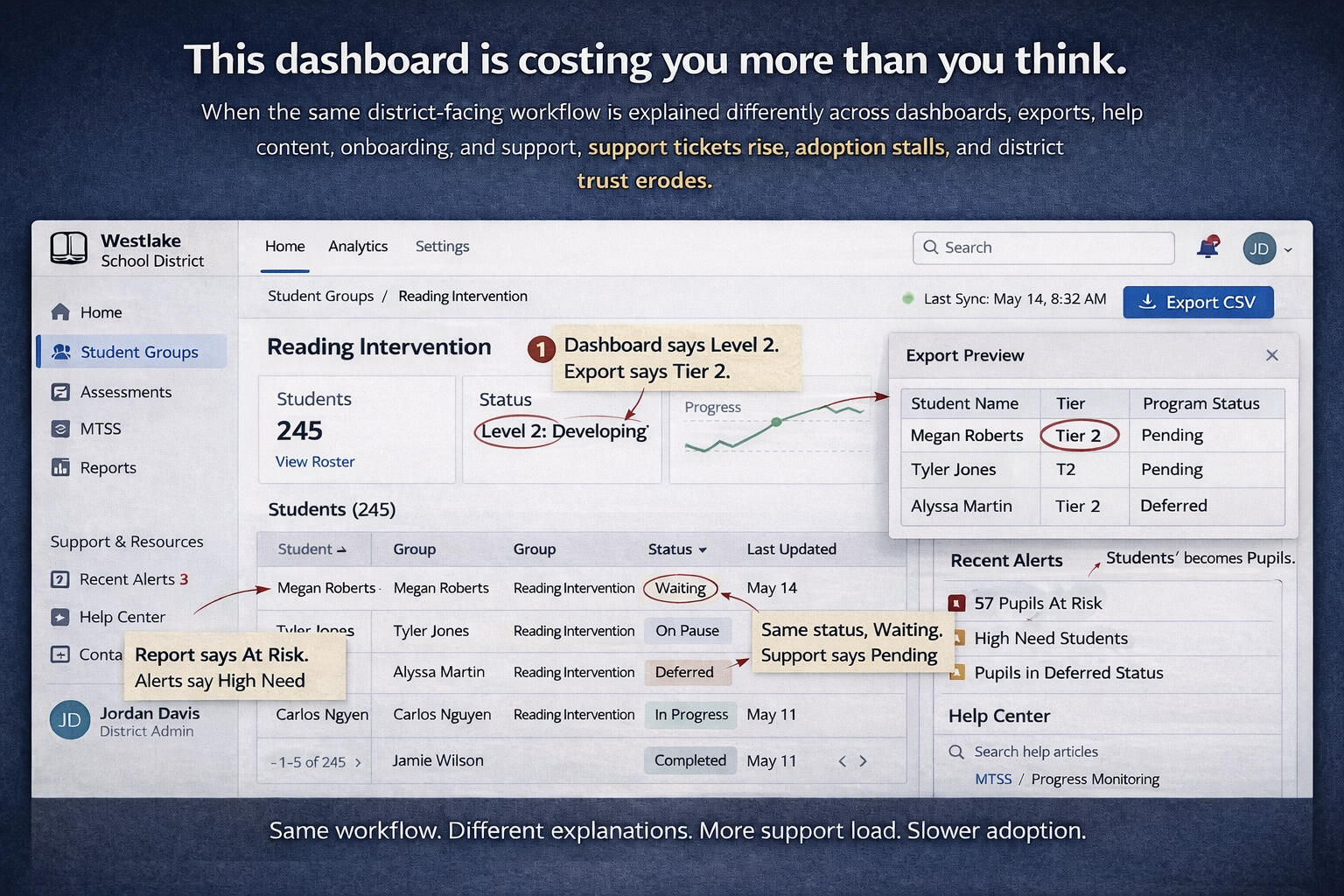
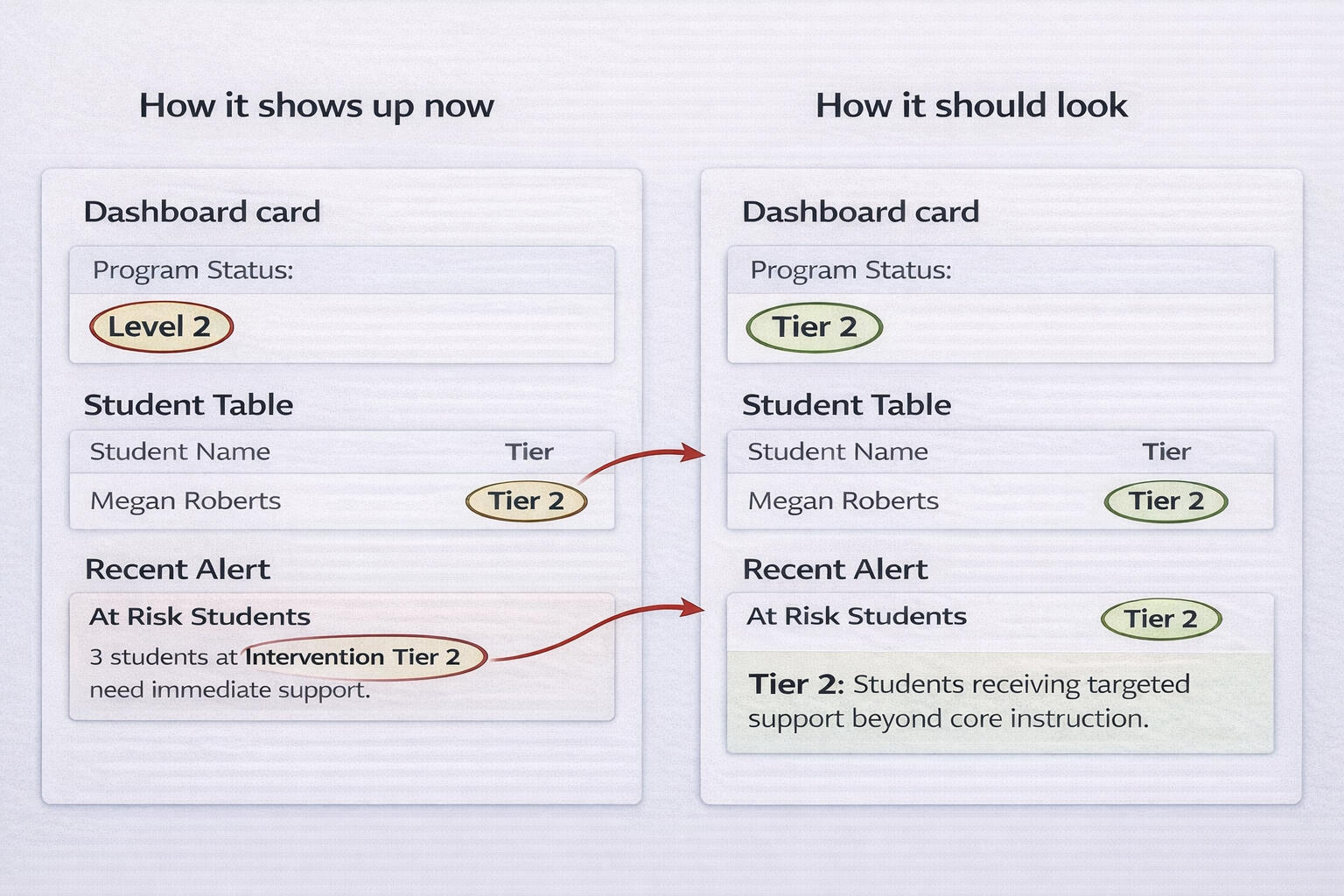
Same concept, different label
The dashboard says one thing. The export says another. Support gets the ticket.
Multiple labels and unclear definitions increase support load and slow implementation.
The report says one thing. Help content teaches another.
The same group of students is described differently across reports, help content, and onboarding, forcing teams to re-explain what should already be clear.
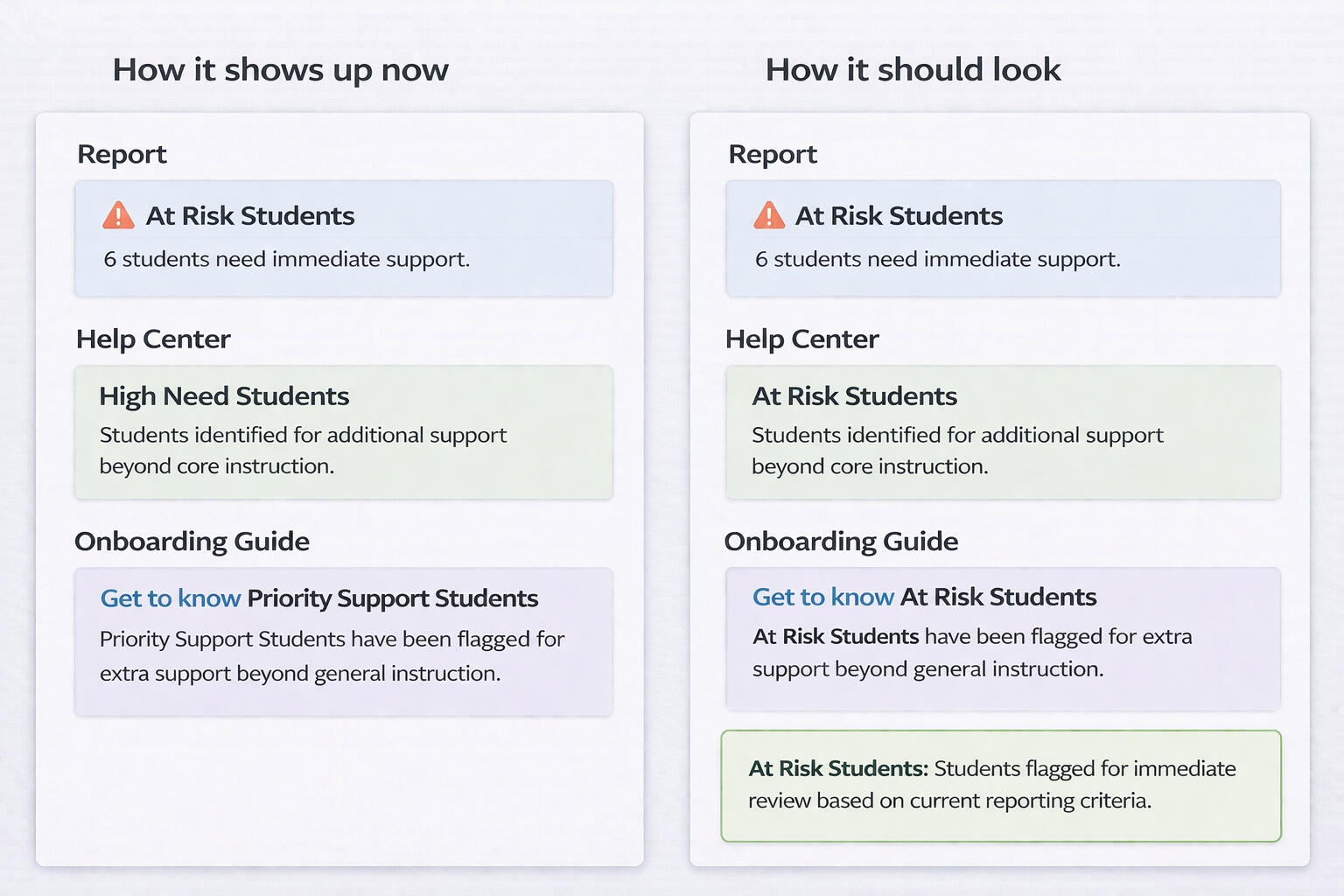
When report language and help content don’t match, teams spend time re-explaining instead of moving implementation forward.
Support ends up translating what the product should already make clear.
When product language is unclear or inconsistent, support becomes the explanation layer, answering questions the workflow should already answer on its own.
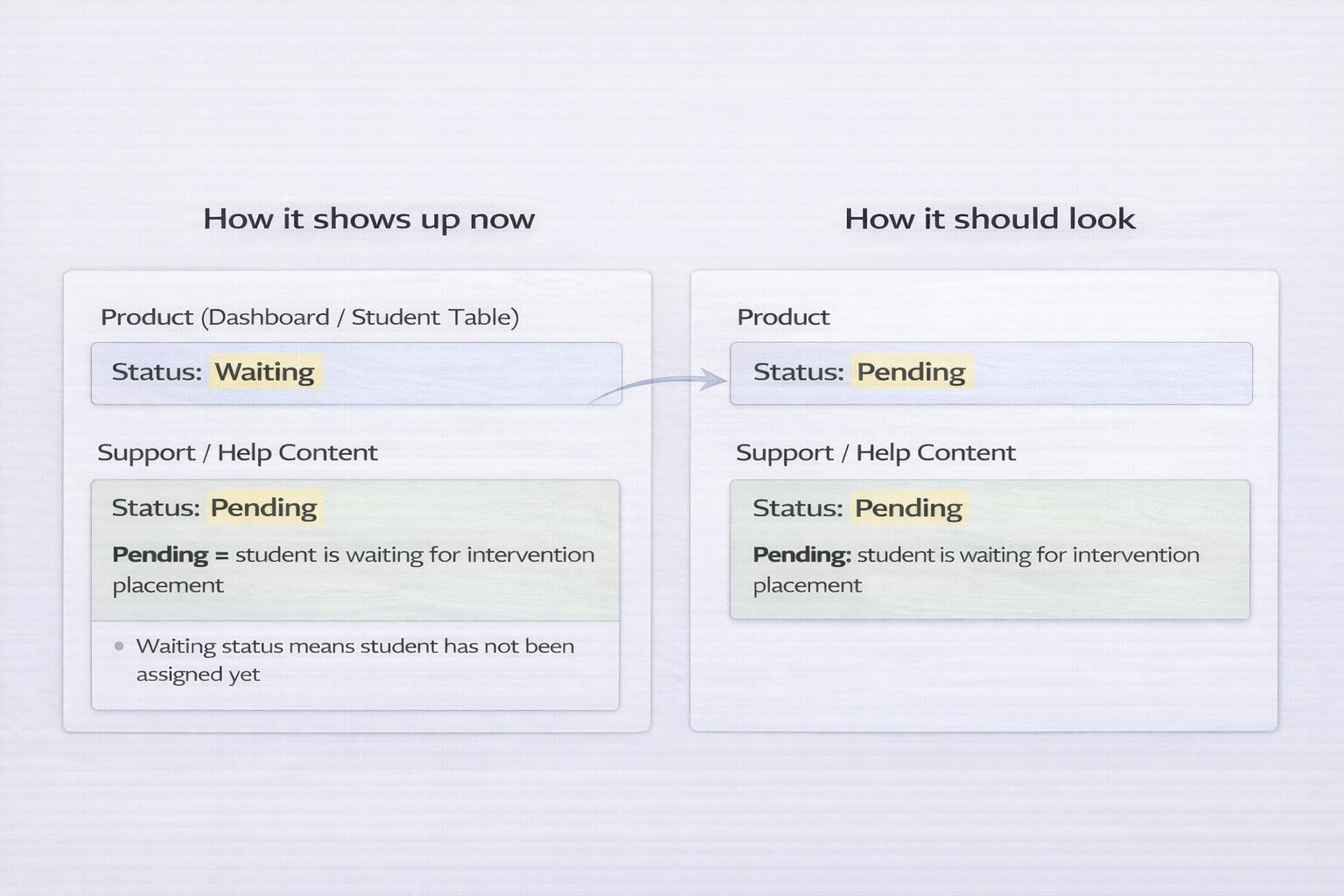
If support has to explain what the product should already make clear, adoption stalls, renewals get harder, and new-market rollout gets riskier.
District-facing language should not feel disconnected from the workflow
When customer-facing terms do not match the language inside the product, districts lose confidence in what they are seeing and adoption gets harder.
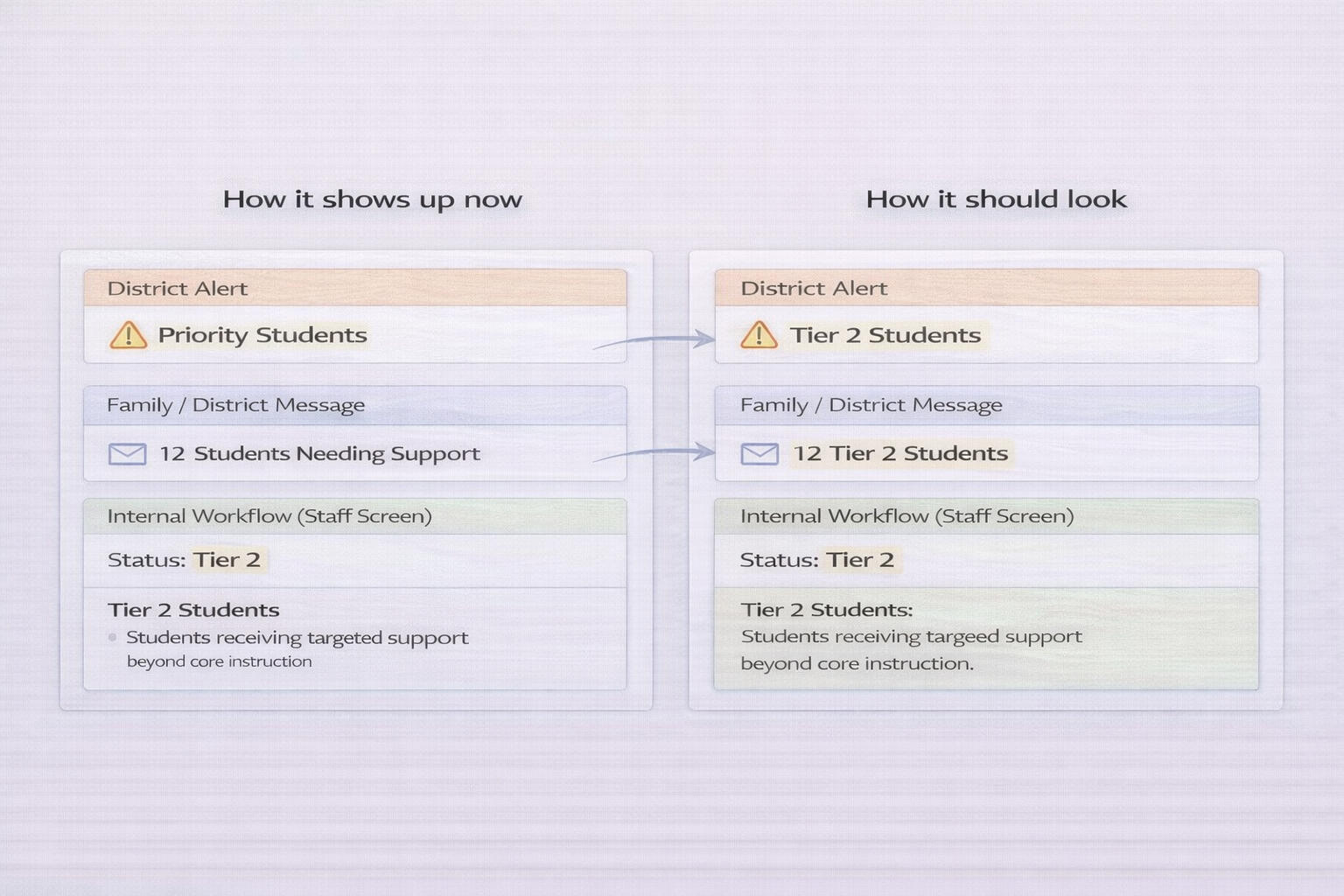
If districts have to translate what they see into how the system actually works, usage drops and trust never fully builds.
What this diagnostic catches
This diagnostic catches where the same workflow is explained differently across the places districts actually rely on.That includes:
dashboards, reports, exports, help content, onboarding materials, and support responses.It shows where the product says one thing, the export says another, and support or onboarding fills in the gaps.This is not about one bad label.
It is about how the same workflow changes meaning depending on where a district encounters it.
What this costs teams
This is not a wording issue. It is operational drag.Teams end up:
re-explaining the same workflow during onboarding
answering repeat support questions that should not exist
building internal workarounds to clarify what the product means
patching confusion instead of fixing itOver time, this creates:
slower rollout across districts
inconsistent understanding of the same workflow
lower confidence in reporting and outputs
weaker product adoption and usageThis cost is not one-time.
It compounds every time a new district is onboarded or a team has to re-learn the product.
What a paid diagnostic does
The paid diagnostic reviews one real, district-facing workflow in your product.It looks at how that workflow is explained across:
product surfaces, reports, exports, help content, onboarding, and support.Then it:
marks exactly where explanation drift is happening
shows where terms, definitions, and labels break alignment
and lays out what needs to change so the workflow reads the same everywhereYou get a clear, surface-by-surface breakdown of what is misaligned and what to fix, based on how districts actually use the product.
If you want this run against one of your workflows, reach out.
Make district-facing workflows easier to understand across your product
The same workflow often gets explained differently across reports, exports, support content, and district-facing views. Accessly turns that into one clear system across the product.
Where this shows up across the product
Accessly standardizes the same workflow across the places districts actually see it.Reports
Status labels, summaries, and district-facing reporting languageExports
Field names, values, and definitions teams rely on outside the UIStudent profiles
Student-level workflow context, services, supports, and status detailsHelp content
In-product explanations and support documentation tied to the same workflowSupport responses
Clear, reusable answers when districts ask what something meansOnboarding and setup
Consistent language used during implementation, training, and rollout
What changes operationally
Less explanation during implementationFewer support tickets clarifying the same workflowClearer reporting language for district teamsOne shared definition across teams and surfacesLess internal cleanup when workflows changeFaster handoff between onboarding, support, and product
Why this matters commercially
Faster implementation without extra translation workLower support load across recurring workflow questionsStronger adoption when districts can follow the product clearlyEasier renewals when reporting is easier to trustCleaner rollout into new states and new workflowsLess internal rework across product, support, and implementation
How this looks inside the product
Inside the product, Accessly keeps workflow language aligned across student records, reporting views, help content, and support touchpoints so districts are not forced to re-interpret the same process in different places.
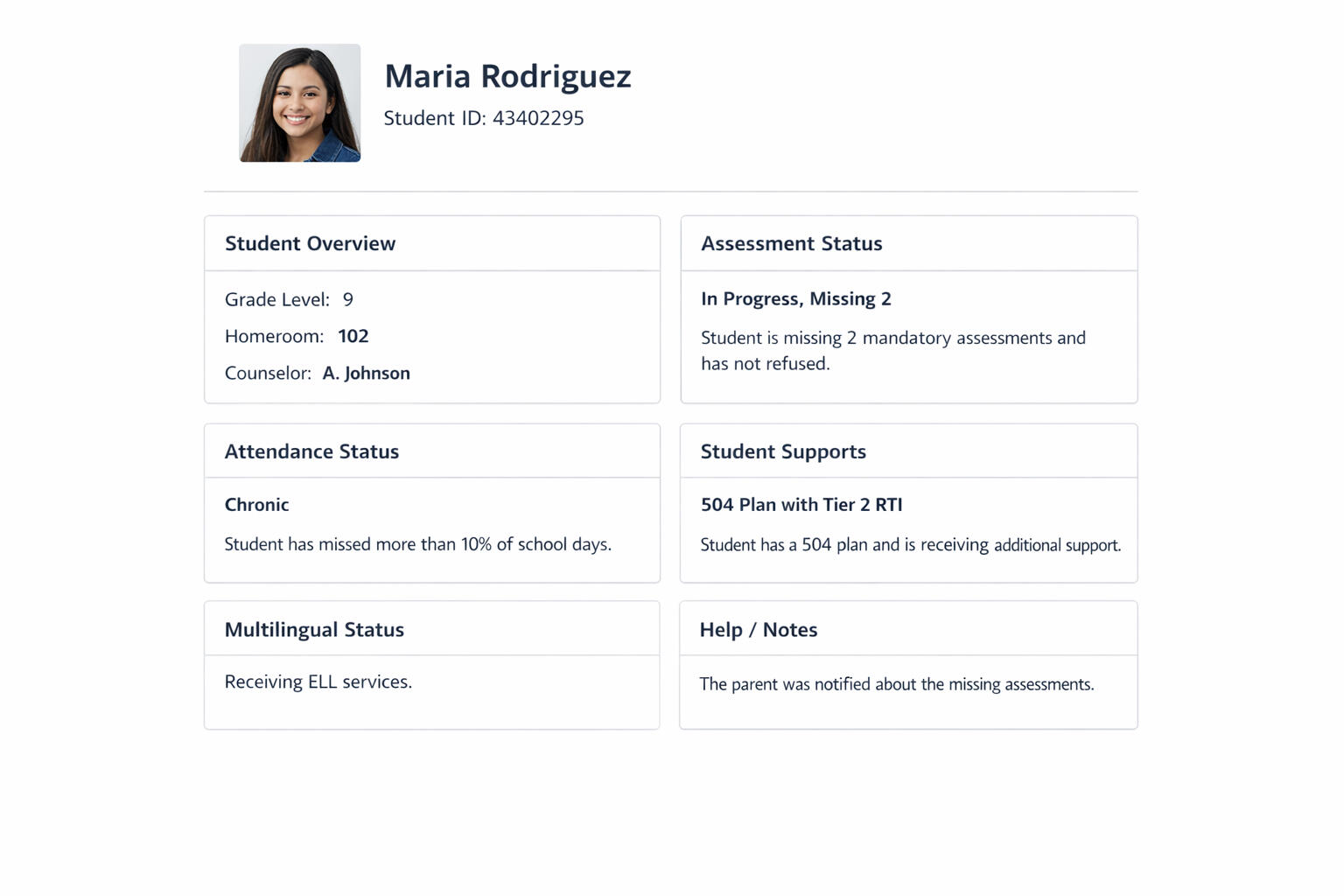
See how this shows up in your product
We walk through one district-facing workflow and show where the same field is being explained differently across reports, exports, help content, and support. Then we show what standardizing it would look like inside the product.